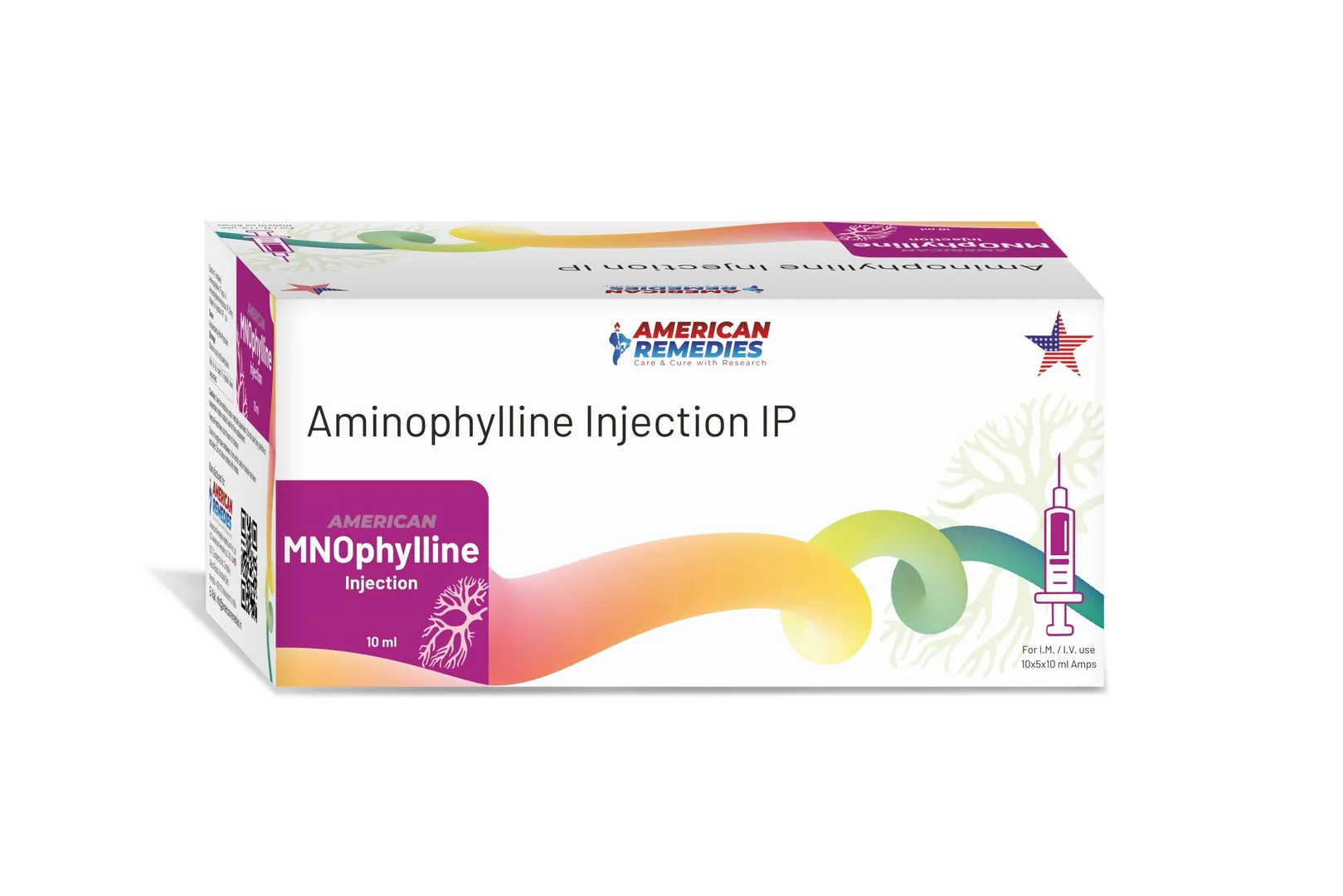
Explore Mnophylline Injection from City Drug House. Check product details, pricing, availability and delivery information for Washington, DC, USA, New Zealand, Zimbabwe & Philippines.
Aminophylline injection is a prescription bronchodilator primarily used in hospital or clinic settings to treat acute bronchospasms related to severe lung conditions, including asthma, chronic bronchitis, and chronic obstructive pulmonary disease (COPD). It works by relaxing and widening the smooth muscles of the airways, making it easier to breathe.
Because it has a narrow therapeutic range, its administration requires precise medical management. The most frequently asked questions regarding aminophylline injection include:
1. Is aminophylline the same as theophylline?
No, they are not exactly the same, though they are closely related. Aminophylline is a compound made of theophylline and ethylenediamine in approximately a 2:1 ratio. The addition of ethylenediamine makes it more soluble, allowing it to be effectively dissolved and administered as an intravenous (IV) injection.
2. Is Aminophylline a steroid or an antibiotic?
As clarified by Apollo Pharmacy, “Aminophylline Injection is not a steroid or antibiotic, it belongs to xanthine derivatives class of medications.”
It functions specifically as a bronchodilator to treat muscle constriction in the airways rather than fighting infections or reducing general inflammation like antibiotics or steroids do.
3. Why must Aminophylline injection be given slowly?Aminophylline must be injected or infused into a vein very slowly. According to clinical protocols from CHEO ED Outreach, “Rapid IV injection may cause headache, flushing, lightheadedness, vomiting, dizziness and hypotension, bradycardia.” Giving it slowly prevents dangerous spikes in blood concentration that could abruptly affect the heart and central nervous system.
4. Why are regular blood tests required during treatment?Doctors monitor your blood levels because aminophylline has a narrow therapeutic index. This means the margin between a dose that effectively opens your airways and a dose that is toxic is very small. Regular blood tests ensure your level stays within a safe, therapeutic window.
5. What are the common and severe side effects?
Common side effects: Nausea, vomiting, headache, restlessness, insomnia, and increased urination.
Severe side effects (signs of toxicity): Irregular or rapid heartbeat (arrhythmias), severe hypotension, persistent vomiting, and convulsions or seizures.
Tell your medical team immediately if you experience dizziness or palpitations during the infusion.
6. What dietary restrictions or interactions exist?
Caffeine: You must limit or avoid coffee, tea, chocolate, and caffeinated colas. Caffeine is also a methylxanthine and can severely compound side effects like tremors, anxiety, and an elevated heart rate.
Smoking: Tobacco use increases how fast your liver clears the drug, meaning smokers often require a higher or adjusted dose.
Medication Interactions: Many drugs drastically affect aminophylline levels. For instance, certain antibiotics (like ciprofloxacin or erythromycin) can dangerous increase its concentrations, while seizure medications (like phenytoin) may decrease its effectiveness.
City Drug House Exporters provides:
Bulk supply for hospitals & distributors
Export to USA. Washington, INDIA
Regulatory documents (COA, MSDS, etc.)
Competitive pricing & reliable logistics
Contact for More Information :
📞 Contact City drug House Exporters from India
🌐 Websites: https://www.citydrugexporters.com
📧 Email: citydrug123@gmail.com
📦 Business Type: Exporter | Bulk Supplier | Distributor
📲 WhatsApp: +91 7666132978
Aminophylline injection is a prescription bronchodilator primarily used in hospital or clinic settings to treat acute bronchospasms related to severe lung conditions, including asthma, chronic bronchitis, and chronic obstructive pulmonary disease (COPD). It works by relaxing and widening the smooth muscles of the airways, making it easier to breathe.
Because it has a narrow therapeutic range, its administration requires precise medical management. The most frequently asked questions regarding aminophylline injection include:
1. Is aminophylline the same as theophylline?
No, they are not exactly the same, though they are closely related. Aminophylline is a compound made of theophylline and ethylenediamine in approximately a 2:1 ratio. The addition of ethylenediamine makes it more soluble, allowing it to be effectively dissolved and administered as an intravenous (IV) injection.
2. Is Aminophylline a steroid or an antibiotic?
As clarified by Apollo Pharmacy, “Aminophylline Injection is not a steroid or antibiotic, it belongs to xanthine derivatives class of medications.”
It functions specifically as a bronchodilator to treat muscle constriction in the airways rather than fighting infections or reducing general inflammation like antibiotics or steroids do.
3. Why must Aminophylline injection be given slowly?Aminophylline must be injected or infused into a vein very slowly. According to clinical protocols from CHEO ED Outreach, “Rapid IV injection may cause headache, flushing, lightheadedness, vomiting, dizziness and hypotension, bradycardia.” Giving it slowly prevents dangerous spikes in blood concentration that could abruptly affect the heart and central nervous system.
4. Why are regular blood tests required during treatment?Doctors monitor your blood levels because aminophylline has a narrow therapeutic index. This means the margin between a dose that effectively opens your airways and a dose that is toxic is very small. Regular blood tests ensure your level stays within a safe, therapeutic window.
5. What are the common and severe side effects?
Common side effects: Nausea, vomiting, headache, restlessness, insomnia, and increased urination.
Severe side effects (signs of toxicity): Irregular or rapid heartbeat (arrhythmias), severe hypotension, persistent vomiting, and convulsions or seizures.
Tell your medical team immediately if you experience dizziness or palpitations during the infusion.
6. What dietary restrictions or interactions exist?
Caffeine: You must limit or avoid coffee, tea, chocolate, and caffeinated colas. Caffeine is also a methylxanthine and can severely compound side effects like tremors, anxiety, and an elevated heart rate.
Smoking: Tobacco use increases how fast your liver clears the drug, meaning smokers often require a higher or adjusted dose.
Medication Interactions: Many drugs drastically affect aminophylline levels. For instance, certain antibiotics (like ciprofloxacin or erythromycin) can dangerous increase its concentrations, while seizure medications (like phenytoin) may decrease its effectiveness.
City Drug House Exporters provides:
Bulk supply for hospitals & distributors
Export to USA. Washington, INDIA
Regulatory documents (COA, MSDS, etc.)
Competitive pricing & reliable logistics
Contact for More Information :
📞 Contact City drug House Exporters from India
🌐 Websites: https://www.citydrugexporters.com
📧 Email: citydrug123@gmail.com
📦 Business Type: Exporter | Bulk Supplier | Distributor
📲 WhatsApp: +91 7666132978
Keywords